
By Joanna Tan · AI in APAC · October 8, 2026
Indonesia’s manufacturers just posted their strongest month in nearly a year. The S&P Global Indonesia Manufacturing PMI jumped to 52.4 in September, snapping back from August’s contractionary 49.8. New orders rose at their fastest pace since February, exports grew at their strongest rate since May 2022, and factories added workers at the fastest clip since February 2025 — a broad-based rebound, not a one-off.
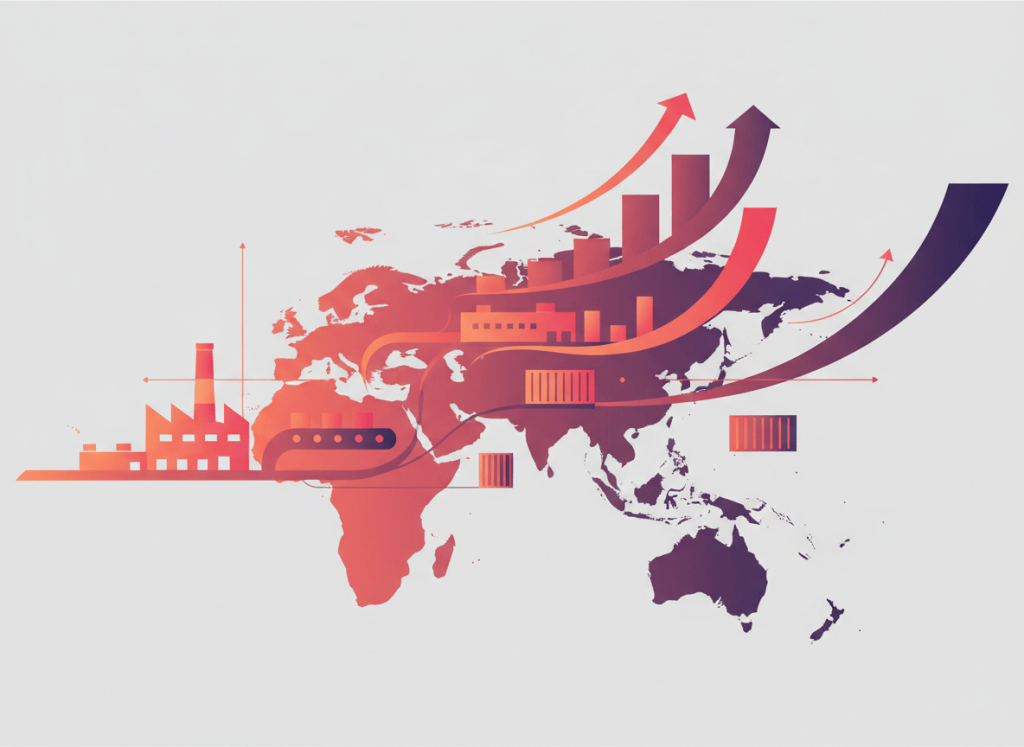
The timing matters. Indonesia’s turnaround lands in the middle of a wider Asian factory upswing that Reuters and S&P Global tied squarely to the global AI buildout: Taiwan’s PMI climbed to 56.7 in September on red-hot demand for AI-related hardware, while South Korea hit 53.9 — its tenth straight month of expansion — with export orders growing at their fastest pace in roughly 15 years, fuelled by semiconductors. Japan’s factories kept expanding too, extending a streak of nine consecutive months of export-order growth even as its headline index eased slightly. India, meanwhile, snapped a three-month slowdown to post its fastest manufacturing growth in seven months.
Neighbouring Vietnam also stayed in expansion, with its PMI holding at 51.9 and business conditions improving for a 15th straight month, even as the pace cooled from August. The Philippines and Malaysia were the region’s outliers, slipping into contraction — a reminder that the AI-driven upswing isn’t yet lifting every corner of Southeast Asia evenly.
Still, the broader picture is one of momentum: as chipmakers and hardware suppliers race to meet AI infrastructure demand, that demand is spilling over into new orders, exports and jobs well beyond the region’s best-known tech hubs — Indonesia’s factory floors among them.
Source: “Asian Factory Activity Expands On AI Demand, Malaysia Contracts”, Business Today Malaysia (Reuters), 1 October 2026; “Indonesia’s Manufacturing PMI Holds Resilient at 52.4 in September 2026”, Databoks/Katadata, 1 October 2026.
Joanna Tan covers AI investment, policy, and the business of AI for AIAPAC.ai Insights.


Leave a Reply